
Zenlit: Drive, Earn and Save
Zenlit Labs, IncTravel & Local
4.3330.00 Reviews
- Version
- 2.4.35
- Installs
- 100.00K
- Age Rating
- Everyone
Screenshots
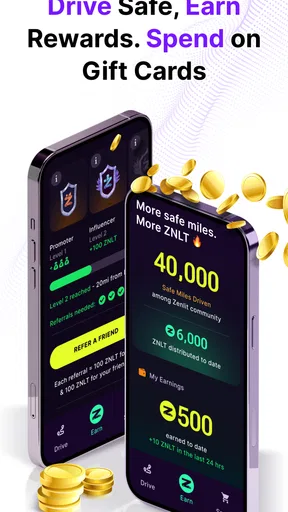
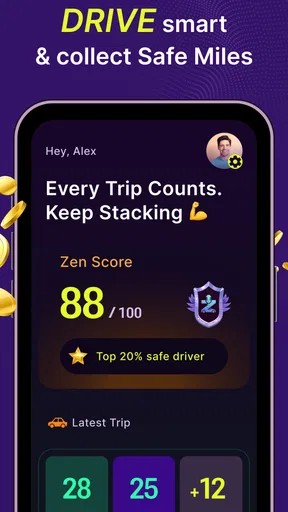
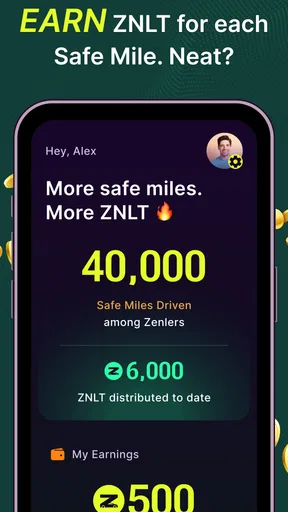
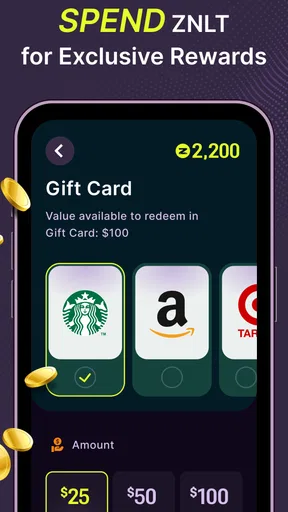
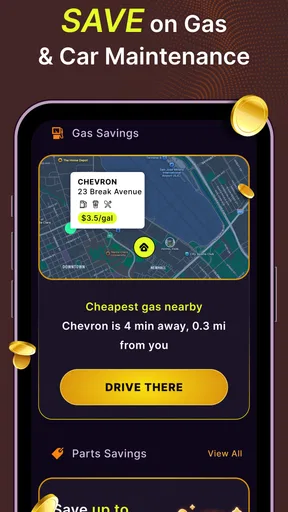
Our Review of Zenlit: Drive, Earn and Save
 Analysis by Appyee
I spend a lot of time driving, so I am always interested in tools that can make ordinary trips feel a little more worthwhile. Zenlit: Drive, Earn and Save takes that idea into the Travel & Local category by focusing on rewards connected with safer driving. It is a free app from Zenlit Labs, Inc, and its main appeal is easy to understand: instead of treating every journey as wasted time, it aims to give careful drivers a reason to stay engaged with good habits.
That sounds attractive, but a rewards app is only useful when it fits naturally into a routine. After looking at the current Android experience, I see Zenlit as a companion for people who drive regularly rather than a replacement for navigation, roadside assistance, or a full vehicle-management tool. Its value comes from making safe trips part of a longer rewards relationship, not from offering a complete travel toolkit in one place.
How Zenlit fits into everyday driving
The app’s store summary presents a simple promise: real-world perks for better driving. In practice, that positions Zenlit differently from a standard map app. Google Maps, Apple Maps, and similar services are built around directions, traffic, and finding places. Zenlit is more about what happens around the trip—encouraging safer behavior and giving the journey a possible benefit beyond simply reaching the destination.
I would not install it expecting turn-by-turn navigation or detailed route planning to be its central purpose. If I am leaving for an unfamiliar address, I still want a dedicated navigation app open. Zenlit makes more sense alongside that tool, especially for recurring commutes, school runs, errands, and other trips where I already know the route and can concentrate on driving rather than interacting with my phone.
The app is listed as suitable for Everyone, which makes its basic positioning approachable for a broad audience. That does not mean every driver will get equal value from it. Someone who drives once a month has fewer opportunities to build a useful routine than a commuter or family driver who is on the road most days. The concept rewards consistency, so frequency matters more than novelty.
One practical point is worth keeping in mind: the app should stay in the background of the driving experience. I would set it up before leaving, check that it is ready, and then put the phone away. A rewards system is not worth creating a distraction. The strongest use case is a low-interaction workflow in which the driver starts a trip, drives normally, and reviews the result later.
What the free price really means
Zenlit is free to use, so there is no purchase decision at the point of installation. That makes trying it relatively low risk, particularly for someone who already drives often and wants to see whether the rewards approach fits their routine. I appreciate that the basic entry barrier is not a subscription or an upfront payment.
Free access should still be judged by the time and attention an app asks for. The important question is not only whether downloading costs money, but whether the effort of opening, checking, and maintaining the app feels worthwhile. I would give it a fair trial during normal driving rather than changing my routes or behavior solely to chase a benefit. If the routine becomes annoying, the fact that the app is free does not automatically make it good value.
The current release is version 2.4.35, and the listed minimum operating-system requirement is Android 10. That is helpful for compatibility planning: owners of older phones may need to check their software before expecting to install it. On a supported device, I would still keep the app updated because driving-related apps depend on reliable background behavior more than a one-time setup suggests.
Zenlit has a 4.3 average from around one thousand ratings, with roughly three hundred reviews, and it has passed one hundred thousand installs. Those figures suggest that the idea has attracted a real user base and generally positive reception. They are useful context, but they do not guarantee that the rewards will feel meaningful for every driver. A rating cannot replace testing the app against your own commute, phone, and driving habits.
Where the value can appear in real life
Imagine a weekday commute that normally feels repetitive. I leave home, follow the same route, and arrive at work without thinking much about the journey. With Zenlit set up properly, that ordinary trip becomes part of a safer-driving routine. I am not changing the route to create activity; I am simply allowing a normal trip to count toward the app’s purpose and checking afterward whether the experience was smooth.
That distinction matters. The app is most convincing when it rewards behavior I already want to maintain: calm driving, fewer risky decisions, and less temptation to handle the phone while moving. It is less compelling if I have to micromanage every trip or remember several steps before and after driving. The best reward systems disappear during the activity and become useful only when I review them later.
A second useful scenario is a household with several regular drivers. A parent who makes school and shopping trips may appreciate having one place that turns safe-driving goals into something visible. I would treat it as a personal incentive rather than a surveillance tool or a way to judge another driver. The benefit is stronger when everyone understands that the phone should not become part of the driving task.
It may also suit people who want a nudge toward more disciplined habits but dislike formal driving courses. Zenlit can sit between a conventional navigation app and a structured telematics program: less focused on route instructions, but more connected to the quality of the trip. That middle ground is its most interesting position.
Three habits that make the app more useful
First, I would create a repeatable pre-trip routine. Before moving, I would confirm that the app is ready, place the phone securely, and start navigation separately if I need it. Doing these actions while parked avoids the common mistake of trying to configure a rewards app at a traffic light or during the first few minutes of a journey.
Second, I would review results at a fixed time rather than after every short drive. Checking constantly can turn a safety tool into another source of distraction. A weekly glance is more practical for a commuter because it shows whether Zenlit fits the overall routine instead of making each trip feel like a test.
Third, I would compare the app’s effort with the benefit I actually receive, not with an imagined future reward. Since Zenlit is free, the main cost may be attention, battery impact, or setup friction rather than money. If the app runs quietly and the perks feel relevant, that is a strong result. If it requires frequent intervention, I would stop using it even if the concept is appealing.
These habits are not flashy features, but they are the difference between a rewards app that becomes part of daily life and one that gets forgotten after installation. Zenlit’s concept works best when the driver treats it as background support, not as a game that demands constant monitoring.
The tradeoffs I would consider first
The biggest tradeoff is that the app’s usefulness depends on regular driving. A pedestrian, remote worker, occasional renter, or city resident who mostly uses public transport may not generate enough everyday trips to make the experience worthwhile. In those cases, a transit planner, walking app, or simple navigation tool would probably offer more immediate value.
There is also a natural tension between tracking a trip and keeping the phone out of mind. Any driving companion has to earn trust through a calm workflow. I would be cautious about permissions and background behavior during setup, reading each request instead of approving everything automatically. The app should support safe driving, not encourage me to interact with the screen while the vehicle is moving.
Another limitation is that rewards are not the same as guaranteed savings on every journey. The app’s purpose is to connect safe driving with real-world perks, but I would not budget around a specific return. I would consider any benefit a bonus until I had used Zenlit long enough to understand how it fits my own routine. This is especially important for drivers who are comparing it with a paid service and need a predictable financial outcome.
Zenlit also should not be confused with a vehicle maintenance platform. If I need service reminders, fuel-cost analysis, repair records, or detailed car diagnostics, I would look for a specialized automotive app instead. Likewise, if I need live traffic decisions, offline maps, or complex multi-stop planning, a mature navigation product remains the better primary tool.
There is a social tradeoff too. Some drivers enjoy visible goals and rewards, while others find them distracting or unnecessary. I would use Zenlit as a private prompt for better habits, not as proof that one driver is safer than another. Driving conditions vary, and an app should complement judgment rather than replace it.
Who is most likely to get real value
I think Zenlit is a good fit for frequent drivers who already use an Android phone running a supported system and want a free incentive for safer trips. Commuters are the clearest audience because repeated journeys give the app a dependable place in the day. Parents, delivery-oriented workers, and people with long weekly routines may also find the idea more engaging than a standard map app.
It is particularly suitable for someone who wants minimal interaction. If I can prepare before leaving, drive without touching the phone, and review the experience afterward, the app respects the most important part of the task. That makes it more appealing to a careful driver than to someone looking for constant feedback or entertainment behind the wheel.
I would also recommend trying it to a person who has never used a driving-rewards app and wants to experiment without paying first. The free price removes the financial commitment, while the current user response—an average of 4.3—provides some reassurance that the concept is not entirely untested. I would still judge it by the usefulness of the perks and the smoothness of the personal workflow.
On the other hand, I would skip it if I rarely drive, need a full navigation solution, or dislike apps that depend on ongoing trip participation. I would also skip it if I am unwilling to review permissions carefully or if any phone interaction might tempt me to look down while driving. In those situations, a simpler app—or no extra app at all—is the safer choice.
How it compares with familiar alternatives
Compared with Google Maps or Apple Maps, Zenlit is not the app I would open first to find a destination. Those services are built for navigation, while Zenlit adds a motivation layer around driving. The two types can coexist, but they solve different problems. I would use the navigation app for directions and let Zenlit handle its own role without expecting it to replace route guidance.
Compared with fuel-saving or mileage trackers, Zenlit’s emphasis is different. A mileage app helps me understand distance, fuel use, or trip costs. Zenlit is more interesting when my priority is encouraging safer driving and potentially receiving perks. If saving money through fuel analysis is my main goal, a dedicated mileage tool may provide clearer information.
Compared with insurance telematics programs, Zenlit appears easier to approach because it is free to try and is not presented as an insurance policy decision. However, drivers seeking a direct insurance discount should compare the actual terms of insurance-specific programs instead. A general rewards app and a formal insurer tracking scheme may have very different purposes and consequences.
That comparison shows where Zenlit earns its place. It is not the most complete app in any one driving category. Its appeal is the combination of accessibility, safe-driving motivation, and possible real-world perks. For the right driver, that combination is enough; for everyone else, a focused alternative may be more useful.
My verdict after weighing the value
I see Zenlit as a sensible free experiment for regular drivers, provided they keep expectations realistic. The app has a clear identity, a practical reason to exist, and a user base large enough to show that the idea has reached beyond a tiny test audience. I like that its central message points toward safer behavior rather than rewarding distraction or aggressive driving.
My recommendation comes with a simple condition: install it only if you can use it passively. Set it up while parked, keep the phone out of reach, and evaluate the experience after several ordinary trips. Do not change safe decisions, routes, or attention patterns just to pursue a reward. The best value here is a safer driving routine with a possible extra benefit, not a promise of effortless money.
For a frequent Android driver, the free entry price makes Zenlit worth trying. For someone who needs navigation, maintenance records, or predictable financial savings, it is not the right primary tool. I would keep it if the trip workflow stayed quiet and the perks felt relevant; otherwise, I would remove it without regret. That is the honest strength of Zenlit: Drive, Earn and Save: it offers a low-risk way to add motivation to everyday driving, but its value depends heavily on how naturally it fits the driver behind the wheel.
Verdict
Strengths of Zenlit: Drive, Earn and Save
- Combines driving, rewards, and savings in one app
- Simple interface makes tracking earnings easy
- Useful for users who drive regularly
- Can encourage better saving habits
- Offers a practical way to manage driving-related goals
Limitations of Zenlit: Drive, Earn and Save
- Rewards may depend on location and available offers
- Earnings can vary and are not guaranteed
- Requires regular activity to make the most of it
- Some features may need access to driving or location data
- Savings benefits may take time to become noticeable
Similar Picks in This Category
View All
Google Maps
Google LLC3.4

Google Maps Go
Google LLC4.1

Booking.com: Hotels & Travel
Booking.com Hotels & Vacation Rentals4.8

Google Earth
Google LLC3.8

Skyscanner Flights Hotels Cars
Skyscanner Ltd4.8

trivago: Compare hotel prices
trivago N.V.4.4
Frequently Asked Questions
What is Zenlit: Drive, Earn and Save, and how does it work?
Zenlit: Drive, Earn and Save is designed to help drivers potentially earn rewards while completing eligible driving activities and manage savings through the app. After installing it, users generally create an account, review the available earning options, and follow the requirements shown in the app. The exact rewards, qualifying actions, and availability may depend on your location, account status, and current Zenlit programs.
Can I really earn money or rewards with Zenlit?
Zenlit may offer opportunities to earn money, points, discounts, or other rewards, but earnings should not be considered guaranteed income. The amount available can vary according to driving activity, promotions, eligibility rules, submitted information, and regional availability. Before relying on any reward, carefully read the app’s current terms, payout conditions, minimum withdrawal requirements, and processing times so you understand how and when earnings can be redeemed.
What permissions and personal information does Zenlit require?
Because Zenlit is focused on driving and saving, it may request permissions such as location access, motion or activity data, notifications, and account information. These permissions can be important for verifying trips or providing app features, but users should review each request before accepting it. Check the privacy policy to learn how data is collected, stored, shared, and deleted, and disable permissions you do not consider necessary.
Is Zenlit safe to use while driving?
Zenlit should never encourage you to interact with your phone while the vehicle is moving. Set up the app before starting a trip, use hands-free features where available, and follow local traffic laws. If the application uses background location or driving detection, confirm that these features work as expected without requiring constant screen attention. Safe driving must always take priority over tracking trips, checking rewards, or completing in-app tasks.
What should I do if my trip, reward, or payout is missing?
If a trip or reward does not appear, first check that location services, mobile data, battery permissions, and background activity access are enabled as required by the app. Review the program rules to confirm that the activity qualified and allow time for synchronization or verification. If the issue continues, save relevant dates, screenshots, and trip details, then contact Zenlit support through the official in-app or website channel rather than relying on unofficial contacts.
